- LaVigne et al., 2021, Scientific Reports: in cell and mouse experiments, several terpenes (including humulene, geraniol, linalool and β-pinene) showed cannabinoid-like activity and selectively enhanced cannabinoid activity. doi [3]
- Raz et al., 2023, Biochemical Pharmacology: in a controlled cell system, selected terpenes combined with THC produced greater CB1 receptor activation than THC alone. doi [4]
- Raz et al., 2026, Biochemical Pharmacology: reported synergistic and additive terpene–THC interactions at CB1 and CB2 receptors in vitro. doi [5]
Terpene science
What the research actually says.
What terpenes are, why they fade, and where the science on terpenes and cannabinoids stands today. Every finding is cited, including the ones that disagree.
This page is for education. It is not medical advice, and nothing here is a claim about how Terp Tips products affect you.
01
What terpenes are.
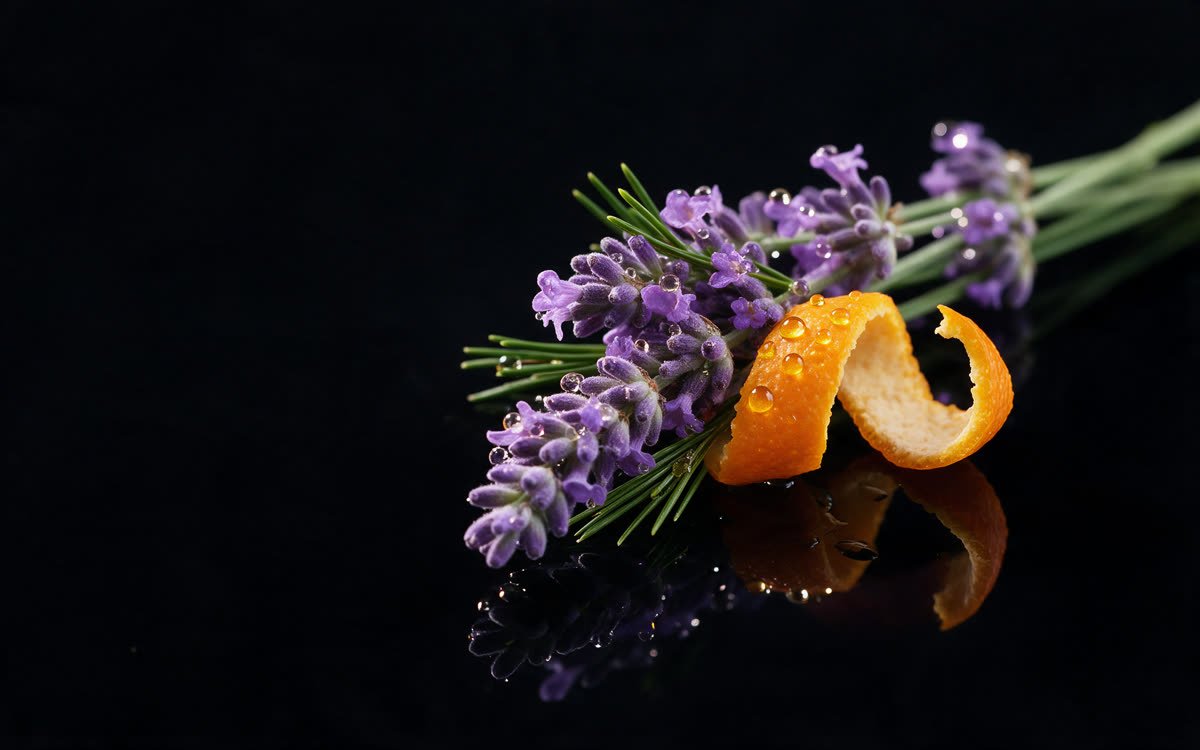
Terpenes are aromatic compounds plants make in their resin glands. In cannabis they are produced in the same trichomes as cannabinoids, and they are what you smell and taste. Many are shared with other plants, which is why a strain can smell like citrus, pine, lavender or pepper.
They are also volatile: small, light molecules that evaporate easily. That is what carries aroma to your nose, and it is also why they do not last.
200+terpenes identified in cannabis
Volatilelight molecules that evaporate easily
02
Why they fade after harvest.
Researchers at the University of Mississippi measured the volatile oil (the terpene fraction) in fresh cannabis buds, then again as the same buds were air-dried and stored.
Drying did not change which terpenes were present, only how much remained. Heat, light and air all speed up the loss.
Ross & ElSohly, Journal of Natural Products 59 (1996): 49–51. PubMed [1]
Volatile oil lost0%At harvest
03
The entourage effect: open science.
The “entourage effect” is the idea that the compounds in cannabis, cannabinoids and terpenes together, interact rather than acting alone. It was popularized in a 2011 review by neurologist Ethan Russo. Since then, laboratory studies have tested it directly. The results are genuinely mixed. [2]
- Santiago et al., 2019, Cannabis and Cannabinoid Research: common cannabis terpenoids did not change THC's activity at human CB1 or CB2 receptors. "If a phytocannabinoid-terpenoid entourage effect exists, it is not at the CB1 or CB2 receptor level." doi [6]
- Finlay et al., 2020, Frontiers in Pharmacology: found no clear interaction between cannabis terpenoids and THC, CBD or 2-AG at cannabinoid receptors. doi [7]
Where that leaves us
Almost all of this research was done in cell cultures or animals, not in people, and none of it tested smoking with a filter tip. Researchers are still working out whether, how and where terpenes and cannabinoids interact. We will update this page as new peer-reviewed work is published.
Background: Russo, “Taming THC,” British Journal of Pharmacology 163(7) (2011): 1344–1364. doi [2]
04
Terpene library.
The terpenes most often found in cannabis, what they smell like, where else in nature you will find them, and what researchers have studied about each one.
Each finding is tagged with what it was tested in. Most of this work was done in cells or animals, and a few studies were done in people. None of it tested a filter tip. For the wider picture, a 2018 review covers the terpenes of cannabis and hops together (Nuutinen, European Journal of Medicinal Chemistry, 2018 [34]).
Myrcene
Earthy, musky, ripe fruit
Also in mango, hops, lemongrass and thyme. Often the most abundant terpene in cannabis.
What researchers have studied
- Mice
Injected at high doses, myrcene relaxed muscles and lengthened barbiturate-induced sleep. do Vale et al., Phytomedicine, 2002 [9]
- Review
A 2021 review found promising results in many animal studies, including calming, antioxidant, anti-inflammatory and pain-relieving effects, and noted that studies in humans are lacking. Surendran et al., Frontiers in Nutrition, 2021 [10]
Limonene
Bright citrus peel
Also in orange, lemon and grapefruit rind.
What researchers have studied
- People
In a double-blind trial with 20 healthy adults, vaporized d-limonene taken with THC lowered ratings of feeling “anxious/nervous” and “paranoid” compared with THC alone. Limonene on its own was no different from placebo. Spindle et al., Drug and Alcohol Dependence, 2024 [11]
- Mice
Inhaled limonene had a calming (anxiolytic-like) effect in a standard maze test. Lima et al., Pharmacology Biochemistry and Behavior, 2013 [12]
β-Caryophyllene
Peppery, spicy, woody
Also in black pepper, cloves and cinnamon. Notable in research as one of the few terpenes shown to bind the CB2 receptor directly (Gertsch et al., PNAS, 2008). [8]
What researchers have studied
- Cells and mice
Binds selectively to the CB2 cannabinoid receptor and activates it. Given by mouth, it reduced an inflammatory response in normal mice but not in mice lacking CB2. Gertsch et al., PNAS, 2008 [8]
- Review
A 2021 review covers the CB2-related research that followed. Hashiesh et al., Biomedicine & Pharmacotherapy, 2021 [13]
Linalool
Floral, lavender, sweet
Also in lavender, coriander and basil.
What researchers have studied
- Mice
Smelling linalool had a calming effect without impairing movement. Mice with no sense of smell showed no effect. Harada et al., Frontiers in Behavioral Neuroscience, 2018 [14]
- Review
A 2021 review of pinene and linalool found the evidence is mostly limited to preclinical studies and that well-designed clinical trials are lacking. Weston-Green et al., Frontiers in Psychiatry, 2021 [15]
α-Pinene
Fresh pine, forest
Also in pine needles, rosemary and dill. The most common terpene in nature.
What researchers have studied
- Mice
Given by mouth, α-pinene lengthened non-REM sleep and shortened the time taken to fall asleep. Yang et al., Molecular Pharmacology, 2016 [16]
- Review
A 2019 review summarises the reported activities of α- and β-pinene, including anti-inflammatory, antimicrobial, antioxidant and calming effects. Salehi et al., Biomolecules, 2019 [17]
- Review
A 2021 review of pinene and linalool found the evidence is mostly limited to preclinical studies and that well-designed clinical trials are lacking. Weston-Green et al., Frontiers in Psychiatry, 2021 [15]
Humulene
Woody, earthy, herbal
Also in hops, where it gives many beers their aroma, and in sage.
What researchers have studied
- Mice and rats
Given by mouth, α-humulene reduced swelling and inflammatory markers in several experimental models. Fernandes et al., European Journal of Pharmacology, 2007 [18]
- Review
A 2024 scoping review of 340 articles found lab and rodent evidence, and few studies that have carried the research through to people. Dalavaye et al., Planta Medica, 2024 [19]
Terpinolene
Fresh, piney, floral, citrus
Also in apples, lilac, cumin and tea tree.
What researchers have studied
- Mice
Inhaled terpinolene had a sedative effect, which came from absorption through the nose rather than from the smell itself. Ito et al., Journal of Natural Medicines, 2013 [20]
- Review
A 2021 systematic review of 57 studies found antioxidant, larvicide and insecticide activity stood out, and that its biological properties remain poorly explored. Menezes et al., Phytomedicine, 2021 [21]
Ocimene
Sweet, herbal, woody
Also in mint, parsley, orchids and mango.
What researchers have studied
- Animals and cells
A 2025 study reported pain-reducing and anti-inflammatory effects of ocimene in animal models. Laraib et al., ACS Pharmacology & Translational Science, 2025 [22]
Bisabolol
Light floral, honey
Also in chamomile flowers.
What researchers have studied
- Review
A 2022 review of studies from 2010 to 2021 describes the mechanisms behind its reported antioxidant, anti-inflammatory and antimicrobial effects. Ramazani et al., Life Sciences, 2022 [23]
Nerolidol
Woody, floral, fresh bark
Also in jasmine, tea tree and lemongrass.
What researchers have studied
- Review
A 2016 review compiles its reported pharmacological and biological activities, along with studies of how the body handles it and its safety. It also notes that the FDA permits nerolidol as a food flavoring. Chan et al., Molecules, 2016 [24]
Eucalyptol
Cool, minty, camphor
Also in eucalyptus, bay leaves and rosemary.
What researchers have studied
- People
In a double-blind, placebo-controlled trial, 32 patients with steroid-dependent asthma took eucalyptol capsules or placebo for 12 weeks. The eucalyptol group was able to reduce its daily steroid dose by 36%, against 7% with placebo. It was swallowed as capsules, not inhaled. Juergens et al., Respiratory Medicine, 2003 [25]
- Review
A 2020 review covers its studied anti-inflammatory and mucus-thinning actions in airway conditions. Juergens et al., Advances in Therapy, 2020 [26]
Geraniol
Rose, sweet floral
Also in roses, geraniums and lemongrass.
What researchers have studied
- Review
A 2019 review summarises studies reporting antitumor, anti-inflammatory, antioxidant and antimicrobial activity, and discusses geraniol as a possible drug candidate. Lei et al., Planta Medica, 2019 [27]
Camphene
Damp woodland, fir needles
Also in cypress, nutmeg and ginger.
What researchers have studied
- Rats
Camphene lowered blood cholesterol and triglycerides in rats with raised lipid levels. Vallianou et al., PLoS One, 2011 [28]
- Rats and cells
Camphene reduced muscle wasting in cell and rat models. Baek et al., Nutrients, 2020 [29]
Valencene
Sweet orange, citrus
Named for Valencia oranges; also in grapefruit.
What researchers have studied
- Mice
Given by mouth, valencene reduced swelling in several models of inflammation. Dantas et al., Biomedicine & Pharmacotherapy, 2022 [30]
- Mice and cells
Applied to the skin, valencene reduced dermatitis-like symptoms in mice. Yang et al., Evidence-Based Complementary and Alternative Medicine, 2016 [31]
Borneol
Earthy, camphor, mint
Also in rosemary, mint and camphor wood.
What researchers have studied
- Review
A 2024 systematic review summarises borneol’s studied pharmacological activity, clinical trials and safety. Hu et al., Phytomedicine, 2024 [32]
- Review
A 2021 review covers research on borneol helping other drugs cross barriers in the body, such as the blood–brain barrier. Kulkarni et al., AAPS PharmSciTech, 2021 [33]
05
Sources.
- Ross SA, ElSohly MA. The volatile oil composition of fresh and air-dried buds of Cannabis sativa. J Nat Prod. 1996;59(1):49–51. PubMed 8984153
- Russo EB. Taming THC: potential cannabis synergy and phytocannabinoid-terpenoid entourage effects. Br J Pharmacol. 2011;163(7):1344–1364. doi:10.1111/j.1476-5381.2011.01238.x
- LaVigne JE, et al. Cannabis sativa terpenes are cannabimimetic and selectively enhance cannabinoid activity. Sci Rep. 2021. doi:10.1038/s41598-021-87740-8
- Raz N, et al. Selected cannabis terpenes synergize with THC to produce increased CB1 receptor activation. Biochem Pharmacol. 2023. doi:10.1016/j.bcp.2023.115548
- Raz N, et al. Synergistic and additive terpene–THC interactions in cannabinoid CB1 and CB2 receptors. Biochem Pharmacol. 2026. doi:10.1016/j.bcp.2026.118185
- Santiago M, et al. Absence of entourage: terpenoids commonly found in Cannabis sativa do not modulate the functional activity of Δ9-THC at human CB1 and CB2 receptors. Cannabis Cannabinoid Res. 2019. doi:10.1089/can.2019.0016
- Finlay DB, et al. Terpenoids from cannabis do not mediate an entourage effect by acting at cannabinoid receptors. Front Pharmacol. 2020;11:359. doi:10.3389/fphar.2020.00359
- Gertsch J, et al. Beta-caryophyllene is a dietary cannabinoid. PNAS. 2008;105(26):9099–9104. doi:10.1073/pnas.0803601105
- do Vale TG, et al. Central effects of citral, myrcene and limonene, constituents of essential oil chemotypes from Lippia alba. Phytomedicine. 2002;9(8):709–714. doi:10.1078/094471102321621304
- Surendran S, et al. Myrcene—what are the potential health benefits of this flavouring and aroma agent? Front Nutr. 2021;8:699666. doi:10.3389/fnut.2021.699666
- Spindle TR, et al. Vaporized D-limonene selectively mitigates the acute anxiogenic effects of Δ9-tetrahydrocannabinol in healthy adults who intermittently use cannabis. Drug Alcohol Depend. 2024;257:111267. doi:10.1016/j.drugalcdep.2024.111267
- Lima NG, et al. Anxiolytic-like activity and GC-MS analysis of (R)-(+)-limonene fragrance, a natural compound found in foods and plants. Pharmacol Biochem Behav. 2013;103(3):450–454. doi:10.1016/j.pbb.2012.09.005
- Hashiesh HM, et al. A focused review on CB2 receptor-selective pharmacological properties and therapeutic potential of β-caryophyllene, a dietary cannabinoid. Biomed Pharmacother. 2021;140:111639. doi:10.1016/j.biopha.2021.111639
- Harada H, et al. Linalool odor-induced anxiolytic effects in mice. Front Behav Neurosci. 2018;12:241. doi:10.3389/fnbeh.2018.00241
- Weston-Green K, et al. A review of the potential use of pinene and linalool as terpene-based medicines for brain health. Front Psychiatry. 2021;12:583211. doi:10.3389/fpsyt.2021.583211
- Yang H, et al. α-Pinene, a major constituent of pine tree oils, enhances non-rapid eye movement sleep in mice through GABAA-benzodiazepine receptors. Mol Pharmacol. 2016;90(5):530–539. doi:10.1124/mol.116.105080
- Salehi B, et al. Therapeutic potential of α- and β-pinene: a miracle gift of nature. Biomolecules. 2019;9(11):738. doi:10.3390/biom9110738
- Fernandes ES, et al. Anti-inflammatory effects of compounds alpha-humulene and (−)-trans-caryophyllene isolated from the essential oil of Cordia verbenacea. Eur J Pharmacol. 2007;569(3):228–236. doi:10.1016/j.ejphar.2007.04.059
- Dalavaye N, et al. The clinical translation of α-humulene – a scoping review. Planta Med. 2024;90(9):664–674. doi:10.1055/a-2307-8183
- Ito K, et al. The sedative effect of inhaled terpinolene in mice and its structure-activity relationships. J Nat Med. 2013;67(4):833–837. doi:10.1007/s11418-012-0732-1
- Menezes IO, et al. Biological properties of terpinolene evidenced by in silico, in vitro and in vivo studies: a systematic review. Phytomedicine. 2021;93:153768. doi:10.1016/j.phymed.2021.153768
- Laraib I, et al. Anti-inflammatory, antihyperalgesic, and gastric safety profiling of ocimene. ACS Pharmacol Transl Sci. 2025;8(3):748–761. doi:10.1021/acsptsci.4c00639
- Ramazani E, et al. Pharmacological and biological effects of alpha-bisabolol: an updated review of the molecular mechanisms. Life Sci. 2022;304:120728. doi:10.1016/j.lfs.2022.120728
- Chan WK, et al. Nerolidol: a sesquiterpene alcohol with multi-faceted pharmacological and biological activities. Molecules. 2016;21(5):529. doi:10.3390/molecules21050529
- Juergens UR, et al. Anti-inflammatory activity of 1.8-cineol (eucalyptol) in bronchial asthma: a double-blind placebo-controlled trial. Respir Med. 2003;97(3):250–256. doi:10.1053/rmed.2003.1432
- Juergens LJ, et al. New perspectives for mucolytic, anti-inflammatory and adjunctive therapy with 1,8-cineole in COPD and asthma. Adv Ther. 2020;37(5):1737–1753. doi:10.1007/s12325-020-01279-0
- Lei Y, et al. Pharmacological properties of geraniol – a review. Planta Med. 2019;85(1):48–55. doi:10.1055/a-0750-6907
- Vallianou I, et al. Camphene, a plant-derived monoterpene, reduces plasma cholesterol and triglycerides in hyperlipidemic rats independently of HMG-CoA reductase activity. PLoS One. 2011;6(11):e20516. doi:10.1371/journal.pone.0020516
- Baek S, et al. Camphene attenuates skeletal muscle atrophy by regulating oxidative stress and lipid metabolism in rats. Nutrients. 2020;12(12):3731. doi:10.3390/nu12123731
- Dantas LBR, et al. In vivo and in silico anti-inflammatory properties of the sesquiterpene valencene. Biomed Pharmacother. 2022;153:113478. doi:10.1016/j.biopha.2022.113478
- Yang IJ, et al. Inhibitory effect of valencene on the development of atopic dermatitis-like skin lesions in NC/Nga mice. Evid Based Complement Alternat Med. 2016;2016:9370893. doi:10.1155/2016/9370893
- Hu X, et al. Advances and perspectives on pharmacological activities and mechanisms of the monoterpene borneol. Phytomedicine. 2024;132:155848. doi:10.1016/j.phymed.2024.155848
- Kulkarni M, et al. Borneol: a promising monoterpenoid in enhancing drug delivery across various physiological barriers. AAPS PharmSciTech. 2021;22(4):145. doi:10.1208/s12249-021-01999-8
- Nuutinen T. Medicinal properties of terpenes found in Cannabis sativa and Humulus lupulus. Eur J Med Chem. 2018;157:198–228. doi:10.1016/j.ejmech.2018.07.076
Educational content only. Not medical advice. These statements have not been evaluated by the Food and Drug Administration. Terp Tips products are flavor accessories and are not intended to diagnose, treat, cure or prevent any disease, or to change the effects of cannabis. For adults of legal age where cannabis or hemp products are lawful.
FIVE COLORS. FIVE PROFILES.